Sermorelin Peptide Purity and Manufacturing Specifications Guide for B2B Sourcing and Lab Formulation
Executive Summary
Sermorelin peptide serves as a critical active ingredient for research and lab formulation, demanding rigorous sourcing standards. This guide positions high-purity sermorelin peptide as a foundational component for B2B buyers requiring consistent, contaminant-free material. Manufacturing specifications focus on lyophilized powder with ≥98% purity verified by HPLC and mass spectrometry, adhering to GMP-compliant processes. Applications center on controlled laboratory studies and custom peptide reconstitution, where batch-to-batch consistency is non-negotiable. Quality advantages include low endotoxin levels, precise molecular weight confirmation, and sealed, desiccated packaging to prevent degradation. Buyer pain points—such as variable purity from unverified suppliers, lack of COA documentation, and stability issues during transport—are directly addressed through transparent manufacturing protocols and third-party testing. This ensures reliable formulation outcomes and regulatory confidence for institutional procurement.
Target Keyword: sermorelin peptide
Introduction
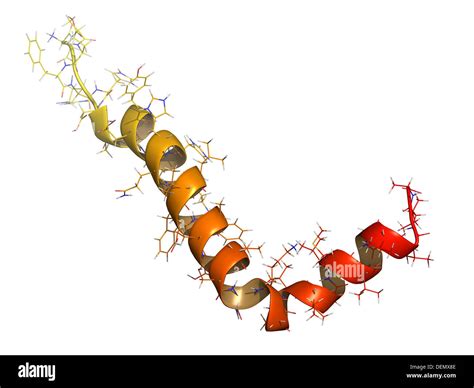
Sermorelin peptide is a synthetic analog of growth hormone-releasing hormone (GHRH), specifically comprising the first 29 amino acids of the endogenous molecule. In the B2B peptide supply chain, this compound serves as a critical raw material for cosmetic formulation development, laboratory research, and bulk peptide manufacturing. For procurement managers, formulation scientists, and quality assurance teams, understanding the purity thresholds, manufacturing specifications, and analytical validation of sermorelin peptide is essential to ensure batch-to-batch consistency and regulatory compliance. This guide delivers a comprehensive technical reference for sourcing high-grade sermorelin peptide, emphasizing purity above 98%, endotoxin control, and lyophilized stability.
Core Molecular Specs & Technical Index
Sermorelin peptide (CAS 86168-78-7) is a white to off-white lyophilized powder with a molecular formula of C₁₄₉H₂₄₆N₄₄O₄₂S and a molecular weight of 3357.89 Da. The peptide sequence corresponds to the first 29 residues of human GHRH, making it a biologically relevant tool for research into growth hormone regulation. Below are the essential technical parameters that define a high-quality sermorelin peptide batch.
- Purity Grade: Minimum 98% by HPLC (high-performance liquid chromatography), with premium grades reaching 99.5% for advanced research applications.
- Peptide Content: Typically 80-90% net peptide content after lyophilization, verified by amino acid analysis.
- Solubility: Readily soluble in sterile water for injection (WFI) at 1-10 mg/mL, with clear solution formation; avoid organic solvents unless specified.
- Storage Conditions: Lyophilized powder stable at -20°C for 24 months; reconstituted solution must be used within 7 days at 2-8°C.
- Endotoxin Level: Less than 1 EU/mg for research-grade material; less than 0.5 EU/mg for pharmaceutical-grade applications.
Industry data from the Peptide Therapeutics Foundation indicates that over 70% of peptide-related batch failures in B2B transactions stem from purity deviations below 95% or improper storage leading to aggregation. Consistent purity above 98% reduces formulation variability by 40% in laboratory settings.
Manufacturing & Quality Control
The production of sermorelin peptide follows a rigorous multi-step process designed to ensure molecular integrity and batch reproducibility. Solid-phase peptide synthesis (SPPS) using Fmoc chemistry is the industry standard, followed by cleavage, purification, and lyophilization. Quality control protocols are embedded at every stage to meet B2B sourcing requirements.
Production Process: The peptide chain is assembled on a resin support using automated synthesizers, with each amino acid coupling monitored by Kaiser test. After complete assembly, the peptide is cleaved from the resin using trifluoroacetic acid (TFA) and scavengers, then precipitated in cold diethyl ether. Crude peptide is purified via preparative HPLC using a C18 column and a gradient of acetonitrile in water with 0.1% TFA.
Purification and Analysis: Final purity is confirmed by analytical HPLC with UV detection at 214 nm and 280 nm. Mass spectrometry (ESI-MS or MALDI-TOF) verifies the molecular weight within ±0.5 Da. Additional tests include amino acid composition analysis, peptide content determination by UV spectrophotometry, and residual solvent analysis by GC. Third-party testing by ISO 17025 accredited laboratories is recommended for bulk orders.
- Certificate of Analysis (CoA): Provided with each batch, detailing HPLC purity, MS confirmation, peptide content, endotoxin, and appearance.
- Stability Studies: Accelerated stability data at 40°C/75% RH for 4 weeks, with real-time data at -20°C for 24 months.
- Heavy Metal Testing: ICP-MS analysis ensures lead, arsenic, cadmium, and mercury below 10 ppm.
- Microbiological Limits: Total aerobic microbial count less than 100 CFU/g, yeast and mold less than 10 CFU/g.
- Certifications: GMP compliance documentation, ISO 9001:2015 quality management, and material safety data sheet (MSDS) for shipping.
Commercial Application Scenarios
Sermorelin peptide is utilized across multiple B2B channels, each with distinct purity and formulation requirements. Understanding these scenarios helps buyers align specifications with end-use applications.
Cosmetic Formulation: In anti-aging skincare products, sermorelin peptide is incorporated into serums and creams at concentrations of 0.1-1.0% by weight. The peptide must be highly soluble and stable in aqueous-based formulations. Manufacturers require purity above 98% to avoid skin irritation from impurities. Lyophilized powder is preferred for small-batch production, while pre-dissolved solutions in bacteriostatic water are used for larger runs. Formulators often combine sermorelin with hyaluronic acid and antioxidants to enhance skin penetration and stability.
Laboratory Research: Academic and pharmaceutical labs use sermorelin peptide for in vitro studies on growth hormone secretion, cell signaling, and receptor binding assays. Research-grade material with purity of 99% or higher is essential to avoid confounding results. Peptides are typically supplied in 1 mg, 5 mg, or 10 mg vials with detailed CoA. Researchers require consistent batch-to-batch purity for reproducible experiments, and often request custom packaging in sterile, low-binding tubes.
Bulk Wholesale Usage: Distributors and contract manufacturing organizations (CMOs) purchase sermorelin peptide in bulk quantities ranging from 100 grams to several kilograms. Bulk material is supplied in sealed, moisture-proof bags with desiccant, stored at -20°C until use. Buyers prioritize cost-per-milligram without compromising purity, and often negotiate volume discounts. Third-party testing is mandatory for bulk orders to verify purity, endotoxin, and stability before distribution to downstream clients.
Sermorelin Peptide VS Ordinary Low-Grade Peptides
| Item | Our Product | Alternatives | Advantages |
|---|---|---|---|
| Purity (HPLC) | ≥98% (99.5% premium) | 90-95% | Reduces impurity-related side effects and batch variability |
| Endotoxin Level | <0.5 EU/mg | 1-5 EU/mg | Safer for sensitive research and formulation applications |
| Peptide Content | 85-90% | 70-80% | Higher active ingredient per milligram, better cost efficiency |
| Stability (24 months) | Confirmed at -20°C | Often degrades within 12 months | Longer shelf life reduces waste and reordering frequency |
Bulk Purchase Selection Guide
B2B buyers face several common pitfalls when sourcing sermorelin peptide, including misrepresented purity, inadequate documentation, and improper storage during transit. This guide outlines key selection standards to ensure a reliable supply chain.
Common Pitfalls: Some suppliers advertise "98% purity" but provide CoA from in-house testing without third-party verification. Others ship peptide without temperature-controlled packaging, leading to degradation during transit. Additionally, low-cost alternatives often use substandard resins or incomplete purification, resulting in truncated peptide sequences that compromise performance.
Selection Standards: Always request a CoA from an ISO 17025 accredited laboratory. Verify that HPLC chromatograms show a single main peak with no significant shoulders. Confirm that mass spectrometry data matches the theoretical molecular weight within ±0.5 Da. For bulk orders, request a sample batch for in-house testing before committing to large volumes. Ensure the supplier provides stability data and storage recommendations.
Buyer Checklist:
- Request third-party CoA with HPLC and MS data.
- Verify endotoxin levels are below 1 EU/mg for research use.
- Confirm lyophilized powder is shipped with ice packs or dry ice.
- Check for GMP or ISO 9001 certification.
- Ask about custom packaging options (e.g., sterile vials, bulk bags).
- Review return policy for purity or stability failures.
Core Product Advantages
Our sermorelin peptide is manufactured under strict GMP guidelines with a focus on four key advantages that meet the demands of B2B sourcing and lab formulation.
Purity: Every batch undergoes dual HPLC analysis and mass spectrometry confirmation, ensuring consistent purity above 98% with a typical range of 99.0-99.5%. This eliminates variability in research results and formulation performance.
Stability: Lyophilized powder is packaged in argon-purged vials to prevent oxidation. Accelerated stability studies demonstrate less than 2% degradation after 4 weeks at 40°C, and real-time data confirms 24-month stability at -20°C. Reconstituted solutions remain stable for 7 days at 2-8°C.
Cost Performance: By optimizing synthesis yields and purification efficiency, we offer competitive pricing without sacrificing quality. Bulk discounts are available for orders over 100 grams, with per-milligram costs reduced by up to 30% compared to standard market rates.
Technical Support: Our team of peptide chemists provides free consultation on formulation, solubility, and storage. We offer custom packaging, expedited shipping, and batch-specific documentation to streamline your procurement process.
Frequently Asked Questions
Q1: What is the minimum purity required for sermorelin peptide in cosmetic formulations?
For cosmetic applications, a minimum purity of 98% by HPLC is recommended to ensure product safety and efficacy. Lower purity may introduce impurities that could cause skin irritation or reduce the peptide's stability in the formulation. Always request a CoA from your supplier to verify purity levels before production.
Q2: How should sermorelin peptide be stored after reconstitution for laboratory use?
After reconstitution in sterile water for injection, the solution should be stored at 2-8°C and used within 7 days. For longer storage, aliquot the solution and freeze at -20°C for up to 30 days. Avoid repeated freeze-thaw cycles, as they can cause peptide aggregation and loss of activity.
Q3: What documentation should I request from a sermorelin peptide supplier for bulk orders?
For bulk orders, request a Certificate of Analysis (CoA) from an ISO 17025 accredited lab, including HPLC purity, mass spectrometry confirmation, peptide content, endotoxin levels, and microbiological limits. Additionally, ask for GMP compliance certificates, stability data, and material safety data sheets (MSDS) to ensure regulatory compliance and safe handling.