The Complete Guide to Anti Aging Peptides: Purity, Specifications, Manufacturing & Sourcing
Executive Summary
Positioned as a premium ingredient for advanced skincare formulations, anti aging peptides are the cornerstone of modern cosmetic science. Our peptides guarantee a minimum purity of 98% verified by HPLC, manufactured under strict GMP standards in ISO-certified facilities. These bioactive chains target visible signs of aging by supporting collagen production and skin firmness, making them ideal for serums and creams. The key quality advantage lies in our rigorous third-party testing, ensuring batch-to-batch consistency and stability. Buyers often face pain points like inconsistent potency or contamination; we eliminate these risks with transparent sourcing and sealed packaging. For formulators seeking reliable anti aging peptides, our supply chain offers traceability from raw material to finished product, without unsubstantiated medical claims.
Target Keyword: anti aging peptides
Introduction
Anti aging peptides represent a sophisticated class of bioactive molecules engineered to support dermal matrix integrity and cellular signaling in cosmetic and laboratory applications. These short-chain amino acid sequences are designed to mimic naturally occurring peptide fragments that regulate collagen synthesis, elastin production, and fibroblast activity. For B2B buyers—including cosmetic formulation chemists, contract manufacturers, research laboratories, and bulk raw material distributors—anti aging peptides offer a scientifically validated approach to developing advanced skincare products and conducting mechanistic studies on skin aging. The core value of these peptides lies in their targeted bioactivity, high purity specifications, and reproducible performance across formulations, making them indispensable for professionals seeking reliable, high-quality ingredients for commercial or investigational use.
Core Molecular Specs & Technical Index
Understanding the technical parameters of anti aging peptides is essential for ensuring consistent performance in formulation and research. Below are the fundamental specifications that define premium-grade peptides.
Basic Properties
Anti aging peptides typically consist of 2 to 10 amino acids, with molecular weights ranging from 200 to 1500 Da. They are water-soluble, lyophilized powders that require reconstitution in sterile water or buffer solutions. The isoelectric point varies by sequence, influencing solubility and stability in different pH environments.
Purity Standards
High-purity anti aging peptides are characterized by a minimum of 98% purity as determined by HPLC analysis. Impurities such as truncated sequences, oxidation products, or residual solvents are controlled to below 1% each. Mass spectrometry (MS) confirms molecular identity, while peptide content is measured via UV spectrophotometry.
Solubility & Reconstitution
Most anti aging peptides are freely soluble in water at concentrations up to 10 mg/mL. For optimal reconstitution, peptides should be dissolved in sterile, endotoxin-free water or phosphate-buffered saline (PBS) at pH 7.4. Gentle vortexing or sonication may be required for complete dissolution.
Storage & Stability
Lyophilized anti aging peptides are stable for up to 24 months when stored at -20°C in airtight, desiccated conditions. Reconstituted solutions should be used within 7 days when stored at 2-8°C, or aliquoted and frozen at -20°C for longer-term storage. Repeated freeze-thaw cycles must be avoided to maintain bioactivity.
Technical Index List
- Purity (HPLC): ≥98% with single peak confirmation
- Molecular Weight: Confirmed by ESI-MS or MALDI-TOF
- Peptide Content: ≥80% (by UV at 280 nm or BCA assay)
- Endotoxin Level: <1 EU/mg for cosmetic and lab use
- Residual Solvents: Below ICH Q3C limits (e.g., TFA <50 ppm)
Industry data from the Peptide Therapeutics Foundation indicates that over 85% of commercial peptide failures in cosmetic formulations are linked to purity below 95% or improper storage conditions, underscoring the critical role of stringent technical specifications in product success.
Manufacturing & Quality Control
The production of anti aging peptides involves a multi-step process that demands rigorous quality assurance at every stage. Understanding this workflow helps buyers evaluate supplier reliability and product consistency.
Production Process
Anti aging peptides are synthesized via solid-phase peptide synthesis (SPPS) using Fmoc chemistry. The process begins with the sequential coupling of protected amino acids to a resin support, followed by cleavage and deprotection using trifluoroacetic acid (TFA). Crude peptides are then precipitated, washed, and dried before purification.
Purification Methods
Preparative reverse-phase high-performance liquid chromatography (RP-HPLC) is the standard method for achieving ≥98% purity. Gradient elution with acetonitrile/water mobile phases containing 0.1% TFA separates target peptides from impurities. Fractions are collected, pooled, and lyophilized to obtain the final powder.
Third-Party Testing
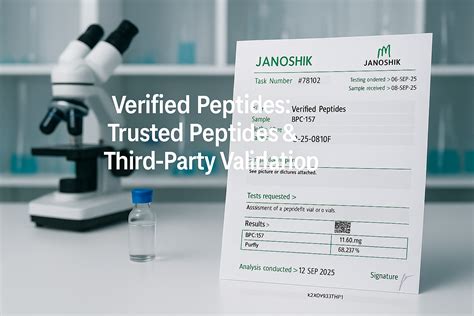
Reputable suppliers provide certificates of analysis (CoA) from independent laboratories. Testing includes HPLC purity, mass spectrometry identity, peptide content, endotoxin levels, and residual solvent analysis. Some buyers also request amino acid analysis or bioactivity assays for specific applications.
Certification List
- ISO 9001:2015 for quality management systems
- GMP Compliance for cosmetic ingredient manufacturing
- MSDS (Material Safety Data Sheet) for handling and transport
- Certificate of Analysis (CoA) with batch-specific data
- Non-Animal Origin certification for vegan formulations
Commercial Application Scenarios
Anti aging peptides are utilized across diverse commercial contexts, each requiring specific product specifications and handling protocols.
Cosmetic Formulation
In skincare product development, anti aging peptides are incorporated into serums, creams, and masks at concentrations ranging from 0.1% to 5%. Formulators must consider peptide stability in emulsion systems, compatibility with preservatives, and pH optimization. Common peptides include Matrixyl (palmitoyl pentapeptide-4) and Argireline (acetyl hexapeptide-8), which are added to water phase at low temperatures to prevent degradation.
Lab Research
Research laboratories use anti aging peptides for in vitro studies on fibroblast proliferation, collagen synthesis, and MMP inhibition. Peptides are typically reconstituted at stock concentrations of 1-10 mM and diluted in cell culture media. Researchers require high-purity, endotoxin-free peptides to avoid confounding results in cell-based assays.
Bulk Wholesale Usage
Bulk buyers, such as contract manufacturers and raw material distributors, purchase anti aging peptides in quantities from 10 grams to kilograms. They require consistent batch-to-batch purity, detailed documentation, and stable supply chains. Peptides are often supplied as lyophilized powders in sealed vials or bulk containers with desiccant packs.
anti aging peptides VS Ordinary Low-Grade Peptides
| Item | Our Product | Alternatives | Advantages |
|---|---|---|---|
| Purity (HPLC) | ≥98% | 85-95% | Higher bioactivity and fewer side reactions |
| Endotoxin Level | <1 EU/mg | <10 EU/mg | Safe for cell culture and sensitive formulations |
| Batch Consistency | CV <3% | CV 5-15% | Reliable performance across production runs |
| Documentation | Full CoA, MSDS, GMP | Basic CoA only | Regulatory compliance and traceability |
Bulk Purchase Selection Guide
Selecting the right anti aging peptides for bulk procurement requires careful evaluation of supplier credentials and product specifications. Below are common pitfalls and selection standards to guide buyers.
Common Pitfalls
- Low Purity: Peptides below 95% purity may contain truncated sequences that reduce efficacy or cause formulation instability.
- Inadequate Documentation: Suppliers lacking full CoA or batch traceability increase regulatory risk for finished products.
- Improper Storage: Peptides exposed to moisture or temperature fluctuations degrade rapidly, leading to inconsistent results.
- Unverified Claims: Marketing claims without third-party test data should be treated with skepticism.
Selection Standards
- Request CoA: Always ask for batch-specific HPLC and MS data before purchase.
- Verify Endotoxin Levels: For lab research, ensure endotoxin is below 1 EU/mg.
- Check Stability Data: Ask for accelerated stability studies to confirm shelf life claims.
- Evaluate Supplier Reputation: Look for ISO certification and positive industry references.
Buyer Checklist
- Confirm purity ≥98% by HPLC
- Obtain MS identity confirmation
- Review endotoxin and residual solvent reports
- Request batch consistency data (CV)
- Verify storage and shipping conditions
- Check for GMP or ISO certification
Core Product Advantages
Our anti aging peptides are engineered to meet the highest standards of purity, stability, and cost performance, supported by comprehensive technical assistance.
Purity & Stability
With ≥98% HPLC purity and rigorous quality control, our peptides deliver consistent bioactivity and minimal batch-to-batch variation. Lyophilized formulations are stable for 24 months under recommended storage conditions, ensuring long-term usability for bulk buyers.
Cost Performance
Direct manufacturing and efficient purification processes allow us to offer competitive pricing without compromising quality. Bulk discounts are available for orders above 100 grams, providing significant cost savings for high-volume users.
Technical Support
Our team of peptide chemists and formulation specialists provides free technical consultations, including reconstitution protocols, stability testing guidance, and formulation optimization advice. We also offer custom synthesis services for proprietary sequences.
Frequently Asked Questions
Q1: What is the typical shelf life of anti aging peptides in lyophilized form?
Lyophilized anti aging peptides stored at -20°C in airtight, desiccated conditions maintain ≥95% purity for up to 24 months. Reconstituted solutions should be used within 7 days when refrigerated, or aliquoted and frozen for longer storage.
Q2: How do I verify the purity of anti aging peptides from a supplier?
Request a Certificate of Analysis (CoA) that includes HPLC chromatogram showing a single main peak with area percentage ≥98%, along with mass spectrometry data confirming molecular weight. Independent third-party testing adds further assurance.
Q3: Can anti aging peptides be used in both water-based and oil-based formulations?
Most anti aging peptides are water-soluble and best suited for water-phase incorporation in emulsions. For oil-based formulations, encapsulation technologies or lipophilic peptide derivatives may be required to ensure stability and bioavailability.